
The Fictional Church
Villains, science fiction, and real life

I am reading the fourth book of Dan Simmons’ Hyperion Cantos, a Hugo award winning science fiction series written in the late 80’s and early 90’s. If I can say one thing about the series other than brilliant, it is that the author’s imagination has incredible range. The first book is told through the eyes of several pilgrims on a final journey to meet the mysterious Shrike, and depending on which story the author is sharing, the reader might find themselves on an intense battlefield, riding a magic carpet over a water world, exploring archaeological ruins, or flying through space on massive sequoia tree ships. I can’t remember the last time I ripped through a new series like I am with the Cantos. It is a testament to the author’s ability to fire up the imagination while planting seeds of mystery and intrigue along the way. It might not be the best series I’ve ever read, but it has become one of my favorites. It doesn’t hurt that there are personal thematic elements like a visit to Frank Lloyd Wright’s Fallingwater and a main character who has a background in hunting ducks in an alien swamp. The problem with the Cantos, so far as there is one, is that I don’t think I can recommend it to anyone.
Simmons’ writing is, to put it bluntly, much too graphic. He has a background in horror writing, as well as science fiction, but the detailed descriptions of pain and intimacy, sometimes together, throw off the otherwise wild ride through space. If I were to recommend the book, it would be awkward knowing someone else has read the scenes. It reminds me a bit of watching an R-rated movie with your parents, and feeling a bit awkward when that scene comes on.
There is another reason I can’t recommend the books, and it’s not a reason I would have worried about earlier in my life. In the first two books of the series, the antagonist is a creature called the Shrike which has, spoiler alert (kind of), been sent back in time by a vast intelligence via ancient future structures called the time tombs. The aforementioned pilgrims are not part of the Shrike Church Cult, but they all have their own connections to the mysterious, mechanical, violent adversary. One (two*) of the characters is a priest and has a bizarre story to tell, but the actual Church, or whatever it is hundreds of years in the future, plays a secondary role. This all changes in the third and fourth books, where the Church, aka the Pax, has become the primary hegemony throughout the known worlds. To Simmons’ credit, the antagonist priest/space captain, Federico de Soya, is as likable as the protagonist duo of Aenea and Raul (sounds like Paul) Endymion. De Soya is a good soldier, so to speak, and carries out his obedience to the Church with an admirable fervor. But like me, de Soya has questions about the rulers of the Pax. I don’t know how this will all end, I need to complete my read-through, but making the Church the boogeyman all feels a bit old hat. I don’t know Dan Simmons and he passed away earlier this year (RIP), and I don’t think he’s necessarily making some big theological statement against a particular religion. His award winning Song of Kali, which I have not yet read, likely picks on the Hindu tradition. Simmons seems to be following a logical line through the world he has created. He is, also, writing some great fiction.
Simmons is not alone in the villainous church tradition. Foremost is outspoken atheist, Philip Pullman, whose His Dark Materials series crafts an overt villainous church and characters, even down to a dying ‘god’ who has been usurped by an angel, Metatron. Pullman’s series is a great read, and I enjoyed it, and there is little graphic writing to turn me away from recommending it. There are other series less direct than Cantos and Dark Materials, but these are the two that come to mind. Pullman’s “Magisterium” is perhaps more direct even than Simmons’ “Pax” in part because the Magisterium has a glaring lack of the central figure to Christians, that of Jesus Christ. What would the Church look like without Christ? I can’t say for sure, but it could easily become a villain. It’s easy enough with Christ at the center! Pullman’s characters, at least the adults, who fight against this Magisterium for freedom and all the rest, aren’t exactly saints, either. One sacrifices a child in the name of science, and his lover cuts off children from their daemon spirit counterparts. In the end, even the young adult main characters can’t seem to find a happy ending. In a weird way, Pullman proves that the world needs Christ. I just wonder if he recognizes it.
This inevitable run-in with Christian themes haunts all authors. You don’t need to write a Christ allegory or story to know that the values Christ espoused are the ones we use for the ‘good guys’. Simmons, to his credit, knows that much. His main characters and better angels in the Pax at least question the behavior of the leadership, they at least fight for values that perhaps the Church once stood for. I don’t know how the Cantos will end, and I reserve the right to change my mind, but I’m just getting bored with the Church as the villain. There is a spiritual reason the Church is portrayed in stories and popular culture as something bad, where religions like Islam are portrayed as being peaceful, but I’ll let you take it from there. Everybody wants a piece of Christ for their own ends, whether they admit it or not. In this case, Simmons is just using it for his story telling.
There are, however, some good concepts to take from a villainous Church. I know a reminder that even the best of us can fall is a welcome theme to explore. How does a religion with evangelism at its core spread in a loving way? How does it handle power? Should it seek it out? Wield it? In the Cantos, there is an underlying theme informed by obscure priest Pierre Teilhard de Chardin, who explored the intersection of evolution, science, and faith. There are, also, those within the Pax who hope to reform it, or save it. For them, and for us, it’s never too late to repent, to re-align our lives with the highest.
All of this is to not to say the Church has never played the villain. But to be fair, it has never been the central villain. Even in the most extreme scenarios which I wish could be relived, let’s say the Spanish destruction of the Aztecs, we are still comparing an alleged genocidal colonial power who gathered many local peoples together to take down a culture who was living on the buildings from people before them and who sacrificed human beings by the thousands down their temples in great ceremonies of death. My model for evangelism is St. Herman of Alaska, but I can understand the absolute horror that a group of Christians, even bad ones, might experience seeing the stains of blood on stone steps in Central America. The Church, Catholic, Orthodox, or otherwise, also has self-corrective measures. The goal, the vision, is that of Christ, and the Church always has that model to return to. No other religion does.
Yes, I am tired of reading about villainous churches, but there is a lot to love in Simmons’ series that shows a depth of theological exploration and adventure that I admire. There are ocean world rebellions with motile islands and dolphin allies, there are orbital forests and God’s Grove where the Brotherhood of the Muir make their homes, and there are artificial intelligences writing poetry and pondering the meaning of life. I will read more from Simmons, I am sure, and though I can’t recommend it, I would be pleased to hear that you picked up his work, too.
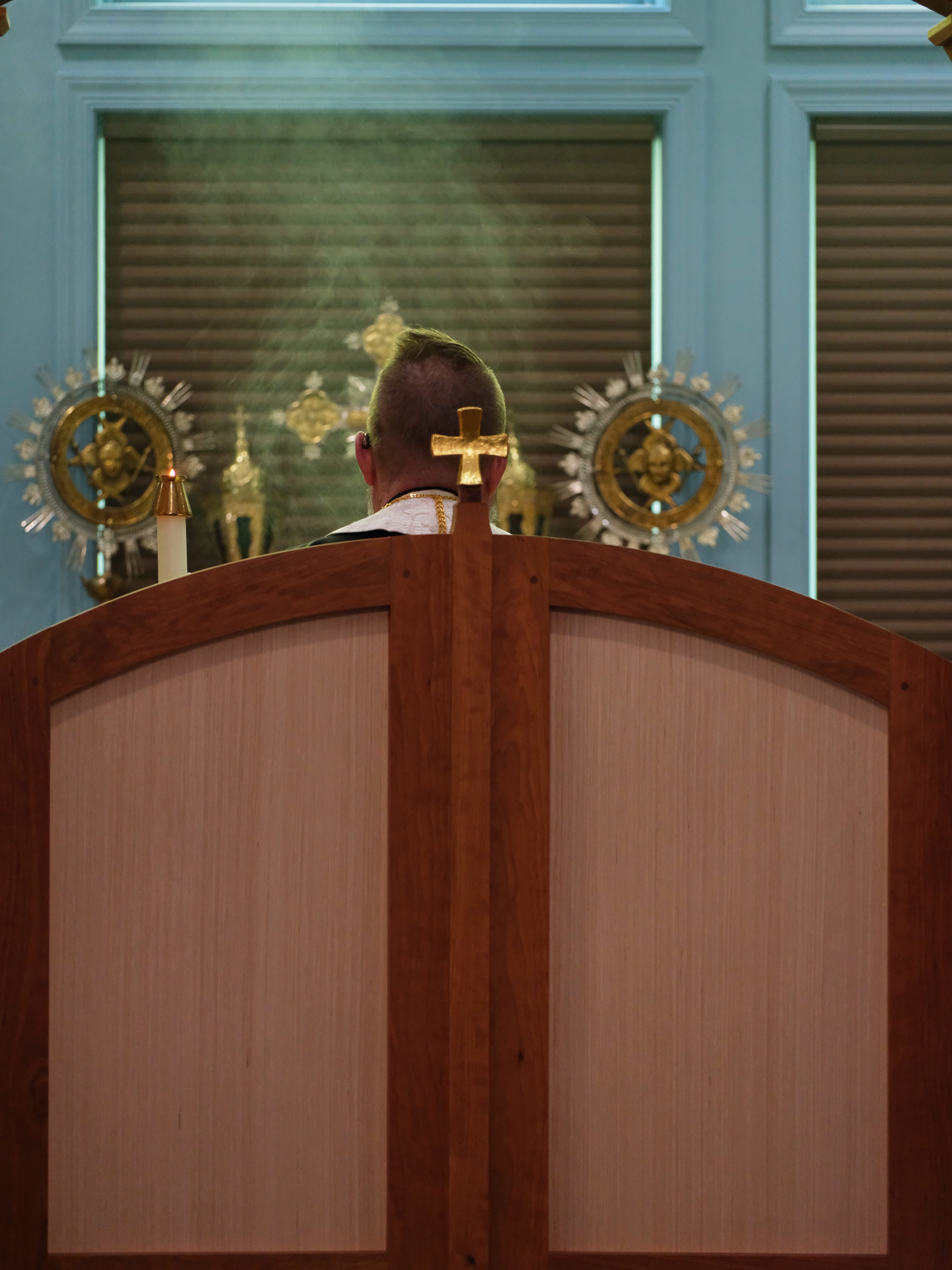
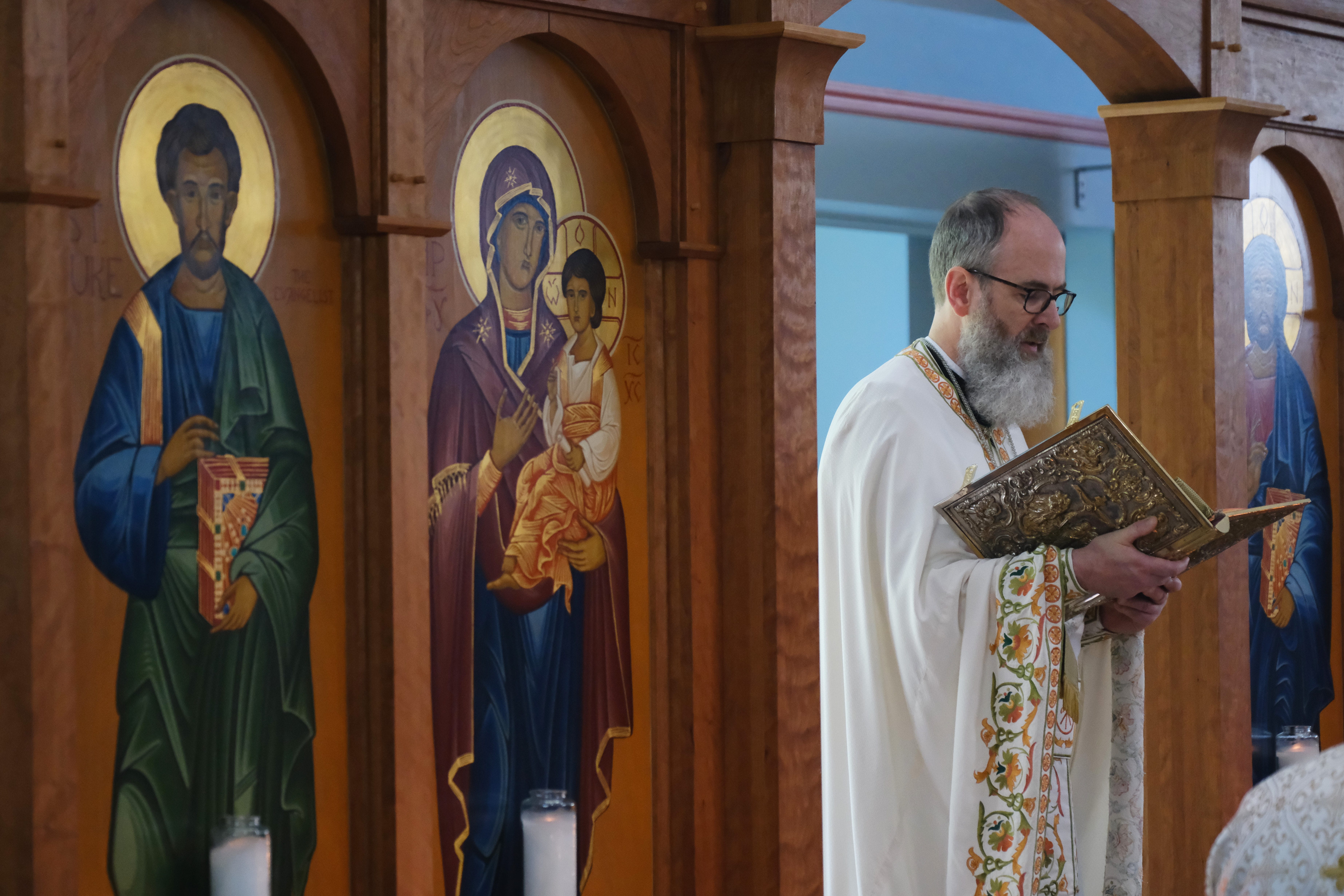
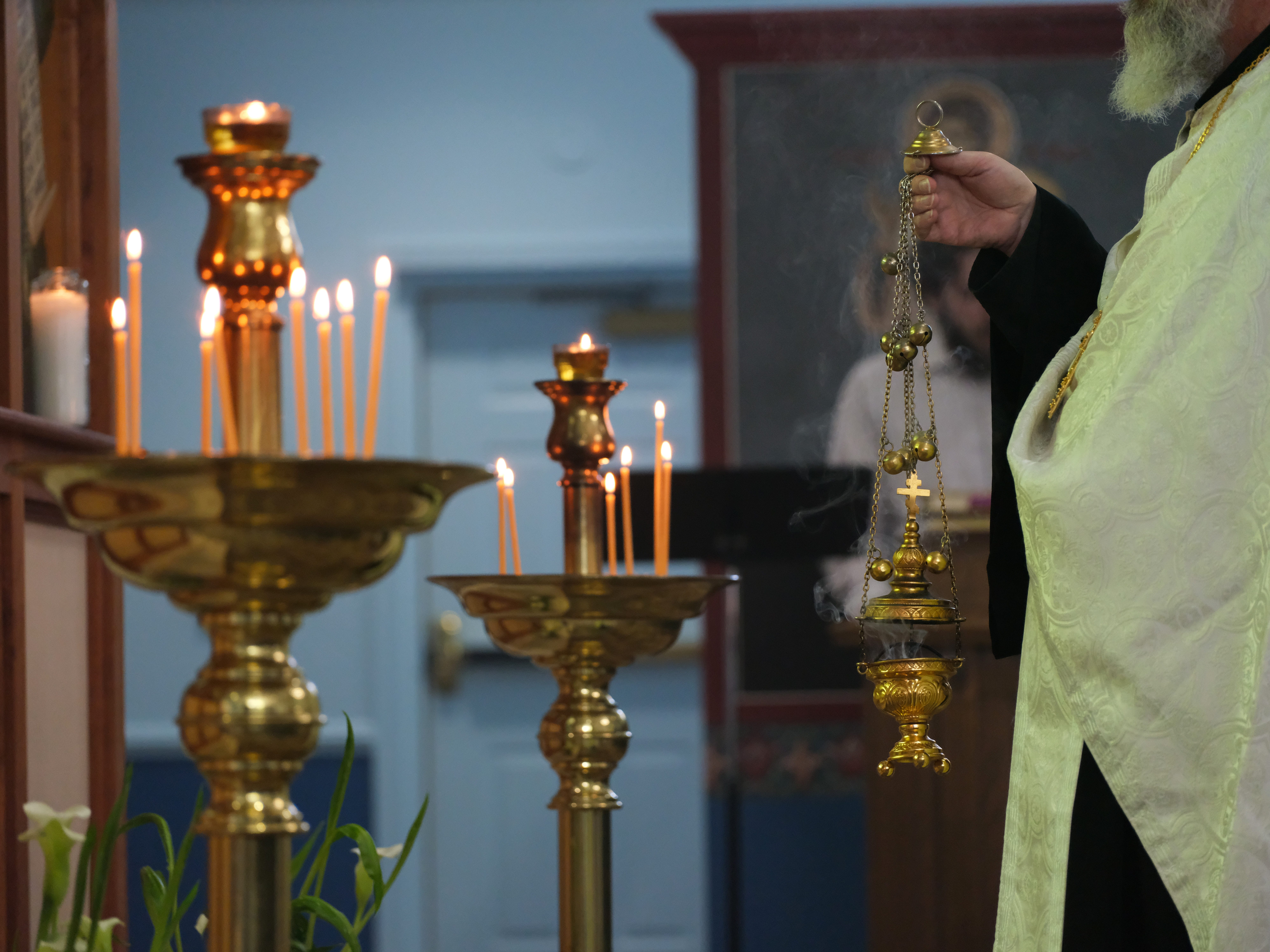
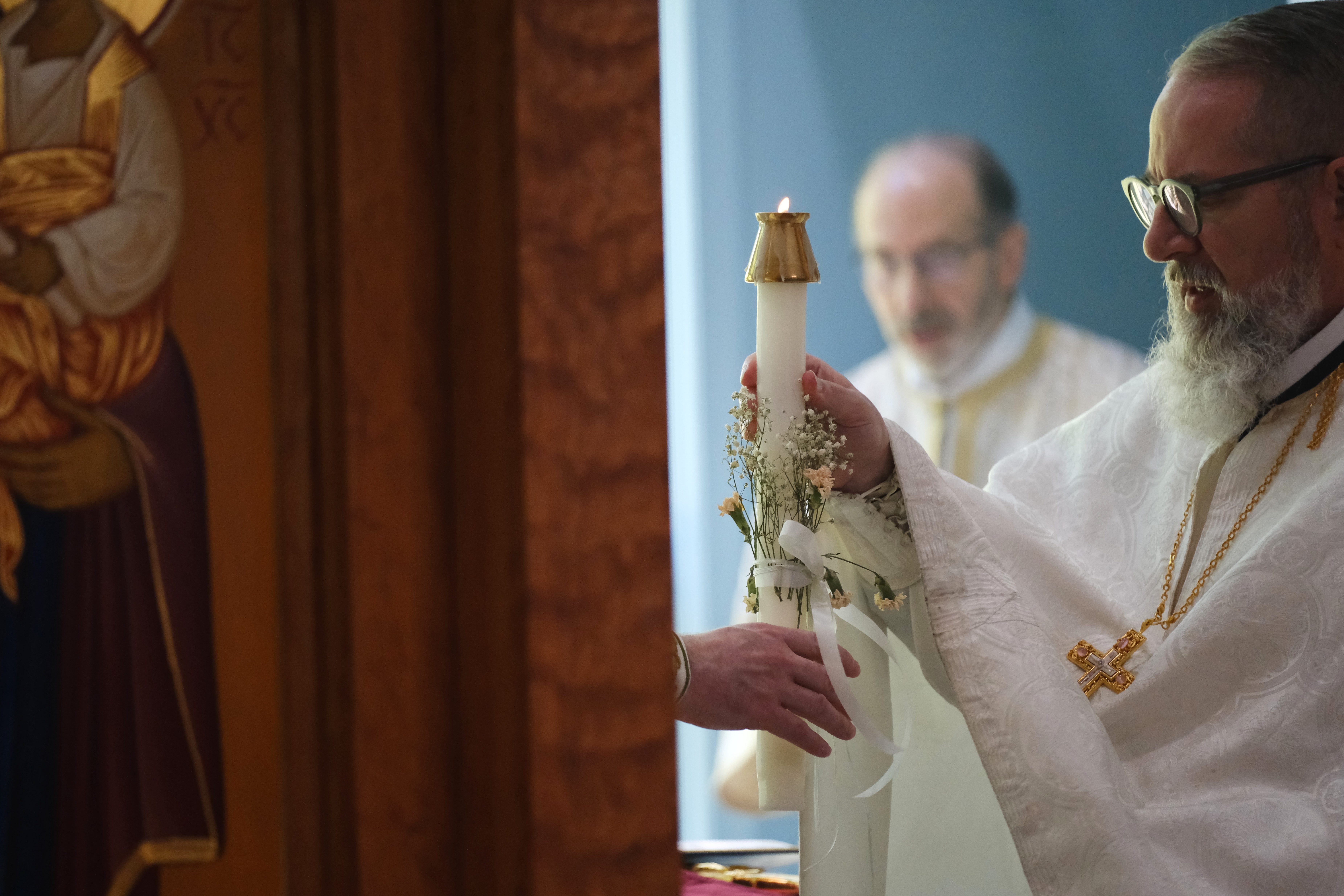
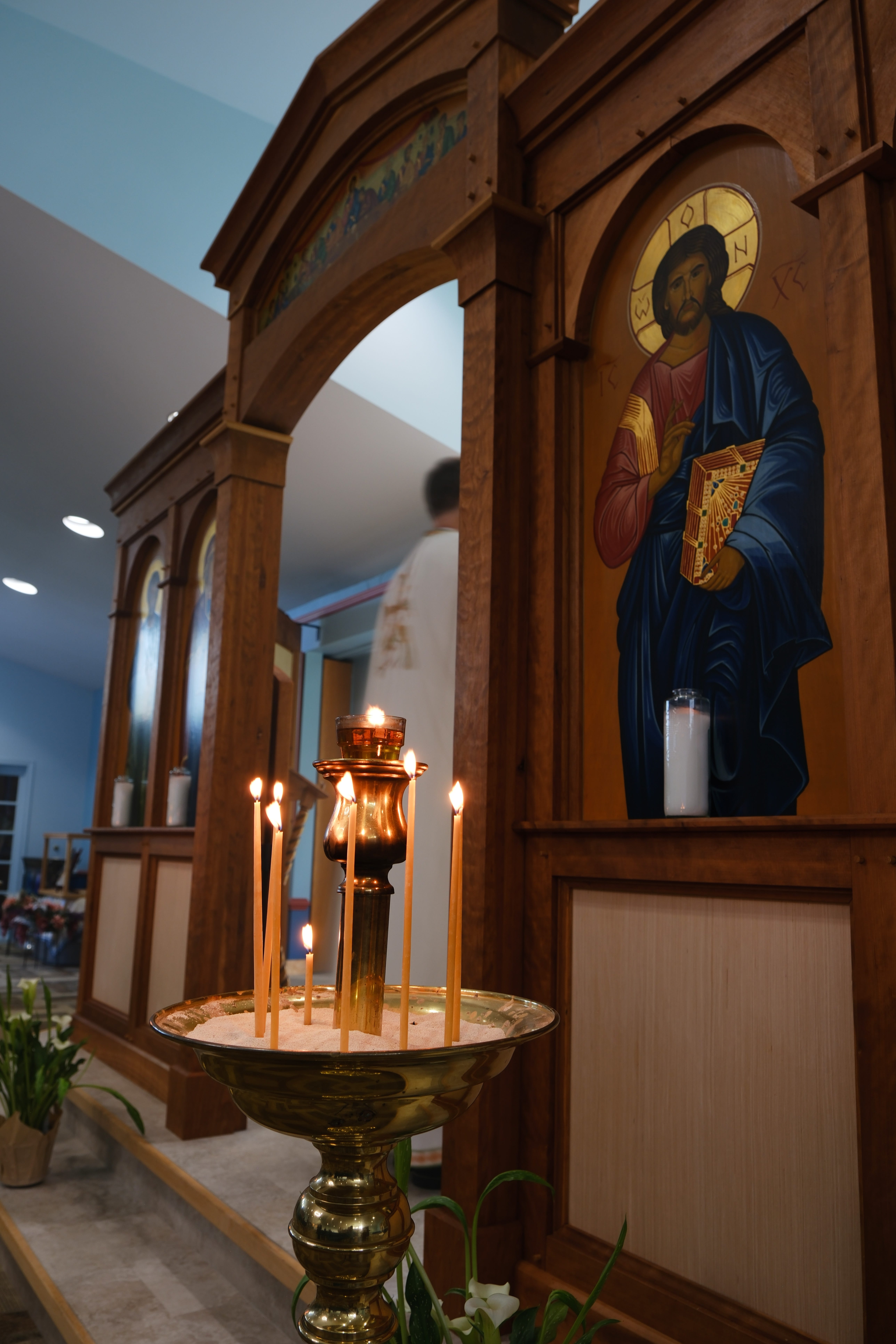
In my reflections about the Church and science fiction, I also had the pleasure to photograph a visit of the Archepiscopal Vicar to my local Antiochian Orthodox Parish. It was a fine reminder that however the Church is portrayed, whatever the various views of the Church might be, the local parish community is the real life of the Church. Here there are relationships, laughs, struggles, prayer, and reverence. Here there are discussions of theology and dogma, there are shared recipes and reading lists, there are young and old and cradle and convert. Here, away from all the perceptions of others is the Body of Christ. Here is what it looks like when we focus not on power or converts or public perception, but a life full of love. Local church life might not be as exciting as riding a tree ship or exploring the time tombs, but it is more impactful, more essential, and unlike great works of fiction, the Church is real.
It’s up to us to make sure it never becomes the villain.
Interesting post! I totally see the internal conflict of wanting to share a good book because you really like it, and at the same time feeling like it's not good for specific reasons. I had similar experiences with a book from Kate Forsyth, I also wrote about that. Do you know that I really liked Philip Pulman's books as a child! I got it as a gift from my (atheistic) brother or sister. At that age, I never realised the link with the Church, fortunately, but I did sense there was something funny about it. Too bad cause he's a good writer.