
The Yearning
On Paul Kingsnorth's Machine

I share a certain empathy with English writer and thinker, Paul Kingsnorth. Though we come from different physical, professional, and political backgrounds, we’ve ended up in a similar place. Paul, by his own admission, found his early niche in left-leaning environmental activism and journalism. I, on the other hand, approached the problems associated with our environment through the right-wing lens of market based solutions via conservation easements and still, now, through the funding of wildlife management by exorbitant auctions and low percentage hunting raffles. There came a time in my early conservation career when I realized my work was not actually a solution to our environmental challenges; I was treating a symptom. I had to take a different approach, a deeper approach, a spiritual approach. It is this deeper approach that Paul is best known for, it is his diagnosis of the spiritual that he details in a series of essays in a new book, Against the Machine. Defining the Machine is not easy, as it is a bit like defining the ocean to a fish. In most of the modern world, and particularly in what might be called Western Civilization, all of us are swimming in the sea.
Roads, power lines, computers, and environmental destruction are all physical aspects of the Machine. If it is ugly, there is a good chance is has a correlation to the Machine. Beauty is not reasonable, after all, it costs too much, takes too much time and skill and might cause someone to stop, for just a moment, to wonder. Like evil corrupting good, the Machine’s structures cannot survive on their own, and drape themselves over beautiful things the world over. Imagine an oil rig or windmill in the ocean, a crumbling concrete bridge over a creek, or any number of Lego block buildings built in the last thirty years. The Machine’s main form is a tumor, with tentacles reaching into our workplaces, homes, and into our own eyes. Beauty does not serve the Machine, only efficiency, profit, and consolidation of power.
There are spiritual components, too. Our modern cities are idols to the religion of the economy. Screens, our new confessionals, may be the biggest, most impactful aspect of the Machine. We as cultural communities have also been upended from our history, from our place, and like a toxic relationship, the Machine makes us dependent on it, the thing that uprooted us in the first place. As Paul writes often in his book, we have been severed from our roots. It’s not my intention to describe the Machine in detail in this post, for that you can buy Paul’s book, but one example connects all the dots for me, and will be sufficient for someone unfamiliar with the concept to see how the Machine impacts our human lives.
During the winter months I often help my wife’s family plow, shovel, and salt a variety of residential and commercial building lots. The work is lonely, and it is late, or early, depending on whether or not you can nap later in the day. But lonely isn’t exactly the right word, it is more like solitude. Snow often limits my view to the front of my plow, buildings are empty and only other winter workers drive the streets. The sounds are of the wind, scraping shovels and the crack of a dropping plow. I am happy to help with this work, it is nice to have an opportunity to serve people, and I don’t mind the extra income. Part of my motivation is that I help to keep the world moving, to keep things functioning. Maybe it is my own little Machine offering. During a recent snowfall, I worked on a building later than normal and a line of cars had parked outside the building at approximately 7:45am. I drove by them, jumped out to shovel nearby, and noticed that in almost all of the cars, the engines were running and the drivers were solo, looking down at their phone screens. Their faces were illuminated in the early darkness of the day. At something like 7:58am, they all exited their cars and walked into the building for work. Maybe it was because I’ve been listening to Paul on too many podcasts, or maybe because I hadn’t run into any people there before, but it was an eerie sight.
It was eerie not just because I could see the Machine’s impact on our lives in real time, but because I recognized it. Plug in, clock in, clock out, check out. I knew the feeling each of those drivers were having. It’s the same feeling that moved me away from a ‘normal’ job in conservation to become self employed and have to do the snow plowing in the first place. I call this feeling of lack, this feeling that dreams for something more, the Yearning.
I can nitpick some of Paul’s philosophical influences, I can suggest that perhaps he’s been looking so long at the Machine that it is staring back at him, and I can also offer caution about romanticizing indigenous cultures, but much of this is left to better minds than me. It is safe to say I agree with the thesis and diagnosis of Against the Machine, and that I want to say more about the cure. And there must be a cure for the Machine, because otherwise, we wouldn’t be staring into our screens at seven in the morning looking for something else. If there wasn’t another way to live, we would not have the Yearning.
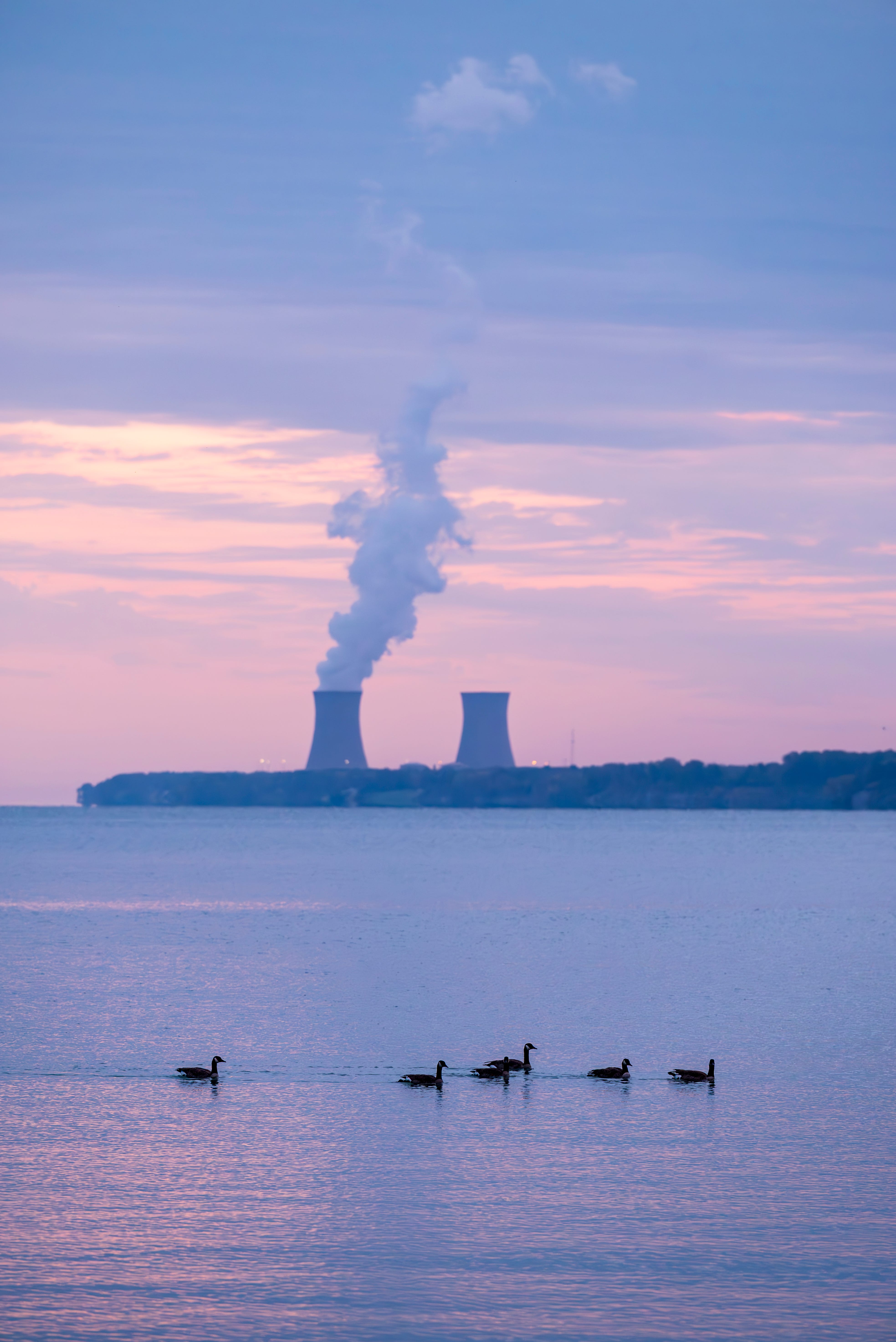
Life, I can say, is good for me. It is good for many Americans and others in the West, but this doesn’t stop me from wondering, from thinking, from dreaming about something else. I know that this good life, whatever that means, is not the best we can do. Why do we wonder at the pyramids and buildings of ancient cultures? Why are we engrossed in Middle Earth and have a desire to walk the streets of a flourishing Minas Tirith in the high days of Arnor? Why do I want to buy a large property and name it for the healing lands of Ithilien? It’s not just history and fantasy, we see dreams in science fiction, too, and not always dystopian. Would you not want to see the lands and peoples of John Carter’s Barsoom? What about the great trees of Kashyyyk? We wonder at these destinations, yes, but we also wonder at our own lives. What might be your dream if money did not matter? Would you live in a small cobblestone village in Europe or beside the mountains of Tibet? Do you garden and hunt in the edenic forests of Ohio? That thing we all feel, no matter how good or bad we have it, is the Yearning.
The Yearning is not a wanting, it is not a call to our modern idea of freedom from all restraint, it is a weaving together of something lost with all there is to gain. We need look no further than the flip phone, an early iteration of the Machine, to know that our stories (Star Trek) can bring something real into the world. Is the flip phone the thing we want to make real? Eh, maybe not, but in comparison to the smartphone, maybe so. If this can come to be, so too can our dreams, can our most wonderful ideas for our families and communities. We also have artists who show that we can create all we dream of, architects who can meld man and nature together, and builders who can craft columns and stone toward the heavens.
Paul is wary of cities, the inevitable outcome of the Machine in action. I am skeptical of cities, too, but only the cities I am familiar with. Is this how all cities end up? Do they all trend toward the south side of Chicago, or East Cleveland? Do they all gobble up resources half a continent away? If so, then maybe we need another way, another system on which to build. Is it Machine thinking to think we can create cities better? Or like a bad technology, are we better off leaving that way of living behind for good?
Cities or not, life is better focused around something local, call it a parish, call it Christ. This local life exists in opposition to the Machine. Where the Machine flattens all cultures and peoples and languages, the parish serves as a cultural and historical anchor. It maintains how unique societies live while keeping connective tissue with other peoples who worship in the same way. I, from small town Auburn, Ohio, can worship with Arabs in Syria, Greeks in Athens, and Aleuts in Alaska. What other system, Machine or otherwise, can maintain this stasis between people and unique cultures? I don’t see Nation States or the United States doing this, nor the European Union or the U.A.E. When compared to the Machine, the Church seems a much deeper, more holy life experience. It even seems that the Machine is trying to imitate the Church, to build its own body instead of the body of Christ. In its current form the Machine is, technically, if not eschatologically, an alternative to Christ and His Church. Another way to say it is that the Machine is an anti-Christ.
I have spoken to Christians who identify AI/AGI and the Machine as the end times. I am too hopeful to agree. Though no one knows the hour of Christ’s return, I don’t think the Machine is what triggers the end of all things. It might be that life gets worse before it gets better, but the Yearning tells me there is much more to see. I can’t look at my young sons and tell them the end is nigh, no, I want them to be as excited about life as I am. Maybe there are planets and dimensions we can explore, new coastlines and mountains, maybe those great cities we like to visit in books and history can be built in our time. Maybe there is a vision of a garden through which we can walk and gather food and stop at small villages for fare and friends. I don’t know, I have only seen bits and pieces of what is possible. This is no prescription for utopia, which always ends in the opposite, but it is a suggestion that we as people have more tools abilities against the Machine than we think. Right now I look out into my backyard and see trees tall enough for the treehouses of Endor, a forest grown with life where deer and foxes and coyotes and owls and all the rest can thrive. Not all is lost, we know what needs saving, we know what needs building. I hope, as individuals and communities, we know what needs repenting.
We can’t fight the Machine, nor should we, but we can turn our backs on it. We can turn our attention to something else, something that needs remembering; our humanity. All this effort to craft the mind of the Machine in the form of AI is really just an attempt to recreate us. It’s a fool’s errand. I can hike mountains and write essays on coffee and honey stingers. AI needs a massive building and entire infrastructure and ecosystem to support basic Google searches. We have what AI wants, we have what the Machine does not; a soul, a spirit, and a body. And we can do amazing things without any kind of technology.
Against the Machine is prescient work, but to see what the Yearning looks like, what our path out of the Machine can model, I point you to my favorite of Paul’s writings, his Wild Saints series. Here, is the opposite of the Machine. Here is what it looks like when we follow our Yearning all the way to holiness. Saints don’t need cell phones or data centers or digital currencies or aircraft carriers or political parties. If we take a moment to think about it, to allow the Yearning into our lungs, we know that we don’t either. We need family and friends, we need good food, we need a fine view, and we need a great fire around which to sit and look at the stars.
There is no doubt that for those all of us who require a healthy environment to live, an environment with plants and animals and sunsets and clean air, the Machine has proven to be of no help. Good people have worked, are still working, to change rules and regulations and raise money and draw lines on maps. It’s good work, it’s honorable work, it’s Machine work. It’s not enough.
The Yearning reminds us that there is more to life. The Machine shows us what it looks like when we live life worrying more about less, when we don’t set down our phones and instead look each other in the eye, in person, in a community, in Christ. Environmentalism and conservation, left and right, science and reason, myth and magic; when we follow their threads down far enough, we see the same light. It is the light that draped one of Paul’s Wild Saints, Seraphim of Sarov, it is the light that Moses encountered on Mount Sinai, it is the light that heals hearts and bodies, the light that communes with the animals and lifts holy ones above the very ground. It is the light that the Machine can’t bear to see, for it will burn it away. As Saint Sarov said, “Acquire the Spirit of Peace, and thousands around you will be saved.” The Spirit of Peace, the Holy Spirit, is what inspires us to look elsewhere, to ignore the Machine and its brief dopamine hits for something deeper, more profound. It is the Holy Spirit that moves us to make something beautiful, to take years to craft something that will last generations. It is the spirit of the Machine, the spirit of the age, that builds with expediency, that builds with no care for its long term impacts. To the Machine, this all makes perfect sense, because despite all appearances, it is not human.
Paul is right about the Machine. I wish he’d been more explicit with the solution. But then again, maybe that’s the Machine talking, dictating the outcome, making requirements, setting down laws and crafting ideologies. Instead, next time I see you on the phone, next time I see you with earbuds, I might do something crazy, I might say hello. In person; in real life. No machines necessary.
It might be too much to prescribe the way forward, and maybe this is what Paul ran into in his writing of Against the Machine. But I do know one thing, that if we look within, and remember who we are, the Yearning will light The Way. The Machine needs us, but we do not need the Machine.
Yearning, a life long endeavor to discover one's purpose and how to fulfill it. As always, a great piece of writing, thought provoking, reflective and creative expression.
Really, really good!! The beginning, the description of the machine, reminds me a bit of Josef Pieper's work and Ian MacGilchrist, have you read/ listened to some of that? And I love the conclusion about the yearning. Reminds me of Surprised by Joy by Lewis and what I wrote on wonder!